In the rapidly evolving landscape of global commerce, the invisible machinery that bridges the gap between a manufactured product and a satisfied end-consumer is paramount. This intricate network is governed by logistics and fulfillment coordination. As consumer expectations for rapid, transparent, and error-free deliveries reach unprecedented heights, businesses can no longer afford to treat their supply chain operations as secondary functions. Today, the efficiency of your fulfillment strategy directly dictates your brand reputation, customer retention rates, and bottom-line profitability.
Whether you are operating a burgeoning direct-to-consumer (DTC) brand, scaling a massive enterprise retail operation, or managing a specialized B2B distribution channel, the foundational principles remain the same. The coordination of moving goods, managing inventory, picking, packing, shipping, and handling returns constitutes a multifaceted ecosystem. Navigating this ecosystem requires a deep understanding of operational workflows, a strategic approach to technology adoption, and a relentless focus on continuous improvement.

While the terms “logistics” and “fulfillment” are frequently used interchangeably in casual business discussions, they refer to distinct, albeit deeply interconnected, phases of the supply chain journey. To coordinate them effectively, one must first dissect their individual functions and understand how they complement one another in a synchronized operational environment.
Logistics coordination encompasses the macro-level orchestration of moving physical goods from a point of origin to a point of consumption. It is the broad umbrella that covers inbound freight, outbound shipping, transportation management, fleet operations, and supply chain mapping. Effective logistics coordination ensures that raw materials arrive at manufacturing facilities precisely when needed, and that finished goods are transported to regional distribution centers efficiently. It involves complex decision-making regarding freight forwarders, customs brokerage for international shipments, intermodal transportation (using ships, trains, and trucks), and route optimization.
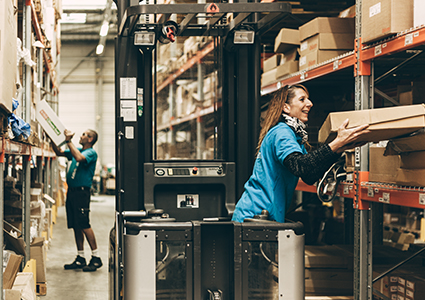
Fulfillment, on the other hand, is generally viewed as a micro-level operation that occurs within the four walls of a warehouse or distribution center. Order fulfillment is the specific process of receiving an order from a customer and executing the necessary steps to get that product into their hands. This includes receiving inventory, organizing it within the warehouse, picking the items from the shelves once an order is placed, packing them securely with the correct dunnage, generating shipping labels, and handing the parcel over to a carrier.
The magic happens at the intersection of these two domains. Logistics and fulfillment coordination represents the seamless handshake between bringing goods into a facility and pushing them out to the consumer. If inbound logistics are delayed, fulfillment operations grind to a halt due to stockouts. Conversely, if fulfillment operations are inefficient, outbound logistics face bottlenecks, leading to missed delivery windows and carrier penalties. True coordination requires establishing bidirectional data flows and unified operational goals across both sectors.
Building a robust operational framework requires meticulous attention to the individual components that make up the fulfillment pipeline. Each stage is a potential point of failure, but also a profound opportunity for optimization.
At the heart of any fulfillment operation lies inventory management. Without accurate, real-time visibility into stock levels, businesses are essentially operating blind. Advanced coordination relies on maintaining optimal inventory levels—holding enough stock to meet demand without overcapitalizing on excess inventory that incurs high storage costs. Techniques such as Just-In-Time (JIT) inventory, First-In-First-Out (FIFO) for perishable goods, and dynamic safety stock calculations are vital. Modern tracking utilizes barcode scanning and RFID (Radio Frequency Identification) technology to ensure that the digital record matches the physical count perfectly.
The physical layout and logical organization of a warehouse drastically impact fulfillment speed. Warehouse optimization involves strategic slotting—placing high-velocity, frequently purchased items near the packing stations to minimize the travel time of pickers. It also includes setting up efficient zoning and routing protocols. Businesses often employ various picking strategies based on their volume:
Order processing must be a frictionless transition from the digital storefront to the warehouse floor. The moment a customer clicks “Buy,” the order should automatically route to the optimal fulfillment center based on inventory availability and geographic proximity. The packing process must be standardized, utilizing intelligent cartonization algorithms to determine the exact box size needed, reducing wasted space and lowering dimensional weight shipping costs.
Last-mile delivery—the final leg of the shipment from the local hub to the customer’s doorstep—is notoriously the most expensive and complex part of logistics. Coordination here means having a diverse carrier mix. Relying on a single carrier is a critical vulnerability. By utilizing a network of national carriers (like UPS, FedEx, or USPS) alongside regional couriers and local delivery networks, businesses can ensure faster transit times, negotiate better rates, and have contingency plans during peak seasons or sudden supply chain disruptions.
In the modern era, logistics and fulfillment coordination is impossible to manage manually at scale. The deployment of integrated technology stacks serves as the central nervous system for supply chain operations.
A sophisticated Warehouse Management System (WMS) is non-negotiable for high-volume operations. A WMS directs all activities within the fulfillment center. It dictates where incoming goods should be stowed, maps the most efficient routes for pickers, manages labor allocation, and generates real-time performance reports. A robust WMS minimizes human error by enforcing validation checks (e.g., scanning a barcode to confirm the correct item was picked) at every step.
While a WMS handles the warehouse, an Enterprise Resource Planning (ERP) system acts as the holistic brain of the company. Integrating the WMS with an ERP ensures that financial data, procurement, customer relationship management (CRM), and sales channels are perfectly synchronized. This integration allows for automated purchasing when inventory drops below reorder points and ensures that the financial implications of logistics costs are instantly reflected in the company’s general ledger.
Artificial Intelligence (AI) has revolutionized demand forecasting. Traditional forecasting relied heavily on historical data, which often failed to account for sudden market shifts or viral trends. Predictive analytics uses machine learning algorithms to process vast amounts of data—including weather patterns, social media trends, and economic indicators—to accurately predict future demand. This allows logistics coordinators to position inventory strategically across different geographical nodes before the demand actually materializes.
Physical automation is solving the massive labor shortages facing the fulfillment industry. Autonomous Mobile Robots (AMRs) transport heavy racks to pickers (goods-to-person picking), drastically reducing the physical strain on workers and accelerating pick times. Automated sorting conveyors, robotic arms for palletizing, and automated storage and retrieval systems (AS/RS) allow fulfillment centers to operate with incredible density and speed, operating 24/7 with minimal downtime.
One of the most critical strategic decisions a business must make regarding logistics and fulfillment coordination is whether to build their own infrastructure or outsource it to experts.
Managing fulfillment in-house provides absolute control over the brand experience. Companies can heavily customize packaging, include handwritten notes, and manage quality assurance with a hands-on approach. It also keeps all operational data internal. However, the capital expenditure (CapEx) required to lease warehouse space, purchase equipment, license software, and hire a workforce is immense. Furthermore, scaling an in-house operation to meet sudden spikes in demand (like Black Friday) is incredibly challenging and risky.
Outsourcing to a Third-Party Logistics (3PL) provider is often the best choice for companies experiencing rapid growth. A 3PL allows a business to convert fixed costs (warehouse leases) into variable costs (paying only for the space and labor used per order). 3PLs leverage economies of scale, providing clients with access to heavily discounted carrier shipping rates, advanced WMS software, and an established network of fulfillment centers, enabling two-day or next-day shipping without building a massive internal network.
Not all 3PLs are created equal. Effective coordination requires choosing a partner that aligns with your specific product category. A company selling hazardous materials, bulky furniture, or refrigerated food requires a highly specialized 3PL. Key factors to evaluate include their Service Level Agreements (SLAs) regarding order accuracy and shipping cutoff times, their technology integration capabilities with your existing e-commerce platforms, and their geographic footprint.
Profit margins in retail and e-commerce are famously thin. Consequently, continuous cost optimization in logistics and fulfillment is essential for sustainable growth.
Carriers charge based on either the actual weight of a package or its dimensional (DIM) weight—whichever is greater. DIM weight is calculated by multiplying length, width, and height, then dividing by a carrier-specific divisor. Shipping a small, light item in an oversized box means you are effectively paying to ship air. Implementing cartonization software to select the smallest possible box, or transitioning from rigid corrugated boxes to lightweight poly mailers for non-fragile items, can result in massive cost savings.
Fulfilling all orders from a single, centralized warehouse means that packages traveling cross-country will incur high shipping costs (spanning multiple shipping zones) and take longer to arrive. By utilizing a distributed inventory model—splitting stock across multiple strategically located fulfillment centers—businesses can ensure that the majority of their customers are within a low-cost, fast-delivery radius (Zones 1-3). This strategy reduces transit times and slashes shipping costs simultaneously.
Shipping is often the single largest expense in a fulfillment operation. Companies must leverage their shipping volume to negotiate better rates with carriers. This involves conducting regular freight audits to recover costs from late deliveries or billing errors, exploring hybrid services (like UPS SurePost or FedEx SmartPost, where the national carrier hands the parcel to the local post office for the final mile), and negotiating surcharges like residential delivery fees and fuel surcharges.
Logistics coordination does not end when the customer receives the product. The process of moving goods backwards from the consumer to the retailer—known as reverse logistics—is a massive undertaking.
Return rates in e-commerce can range anywhere from 15% to 30%, especially in the apparel and footwear sectors. If not managed correctly, returns can completely erode profitability. A convoluted return process also damages customer loyalty; conversely, a seamless return experience is one of the strongest drivers of repeat purchases. Reverse logistics is intrinsically linked to customer satisfaction.
Effective coordination of reverse logistics requires a dedicated workflow. When an item is returned, it must be rapidly inspected, graded for its condition, and categorized. The system must dictate whether the item is restocked as new, refurbished, sold to a liquidator, or destroyed/recycled. Providing customers with pre-printed return labels, establishing self-service return portals, and offering return-to-store options for omnichannel retailers help expedite the process and get valuable inventory back into the sales cycle quickly.
The logistics industry is constantly adapting to technological breakthroughs and shifting societal priorities. Staying ahead of the curve is vital for maintaining a competitive edge.
Consumers and regulatory bodies are increasingly demanding environmentally responsible supply chains. Green logistics involves optimizing delivery routes to reduce fuel consumption and greenhouse gas emissions, transitioning to fleets of electric vehicles (EVs) for last-mile delivery, and adopting 100% recyclable, biodegradable, or compostable packaging materials. Sustainable fulfillment is rapidly transitioning from a niche marketing tactic to an operational baseline.
The line between brick-and-mortar retail and e-commerce has blurred. Omnichannel fulfillment leverages physical retail stores as mini-distribution centers. Strategies like Buy Online, Pick Up In-Store (BOPIS), Curbside Pickup, and Ship-From-Store drastically reduce shipping costs and delivery times. Coordinating this requires hyper-accurate, real-time inventory visibility across the entire enterprise, ensuring that an online order doesn’t allocate an item that a walk-in customer is currently holding.
Blockchain technology is poised to revolutionize logistics by providing an immutable, transparent, and decentralized ledger of a product’s journey. From the sourcing of raw materials to the final delivery, every touchpoint is recorded securely. This level of traceability is invaluable for verifying product authenticity, proving ethical sourcing compliance, and rapidly identifying the source of defects or contamination in the supply chain.
Supply chain management is the overarching strategy that encompasses the entire lifecycle of a product, from raw material sourcing and manufacturing to marketing and final delivery. Logistics is a specialized subset of the supply chain focused specifically on the physical movement, storage, and distribution of goods within that chain.
Improving fulfillment speed requires a combination of technology and optimized warehouse layouts. Implementing a WMS to optimize picking routes, using barcode scanners to reduce human error, utilizing distributed inventory networks to store products closer to end consumers, and transitioning to automated picking systems can all dramatically reduce turnaround times.
3PL stands for Third-Party Logistics. A 3PL provider is an external company that handles outsourced logistics and fulfillment services for a business. They typically provide warehousing, inventory management, picking and packing, freight forwarding, and shipping services, allowing the business to focus on product development and marketing.
Dimensional weight pricing is a billing technique used by shipping carriers that considers the volume (length x width x height) of a package relative to its actual weight. Carriers charge based on whichever number is higher. This means shipping a lightweight item in a very large box will result in expensive shipping costs, highlighting the need for optimized packaging.
Reverse logistics, or the management of returns, is crucial because it directly impacts profitability and customer loyalty. Efficiently processing returns allows businesses to recover the value of the product by getting it back into inventory quickly, while a smooth return experience encourages customers to shop with the brand again in the future.
Partner with REEN to optimize your marketplace presence, streamline operations, and drive sustainable growth with data-driven strategies.