In the hyper-competitive arena of global e-commerce, simply listing a product on the world’s largest marketplace is no longer a viable business strategy. The days of “build it and they will come” are long gone. Today, achieving sustained, scalable success requires comprehensive Amazon growth solutions. As the marketplace becomes increasingly saturated, sellers and brands must pivot from basic operational tasks to sophisticated, data-driven methodologies that encompass every facet of the platform.
A truly comprehensive growth strategy does not view Amazon as a static catalog, but rather as a dynamic search engine, a highly targeted advertising network, and a complex logistical ecosystem. Success demands a synergistic approach where organic search optimization, aggressive paid advertising, impeccable brand presentation, and flawless fulfillment operations work in perfect harmony. This master guide dissects the intricate layers of the Amazon ecosystem, providing a holistic blueprint for sellers, brand owners, and enterprise agencies aiming to dominate their respective categories, outmaneuver competitors, and capture maximum market share.
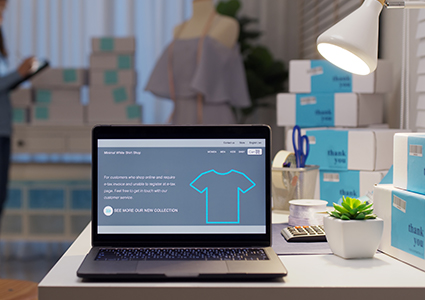

The foundation of any successful Amazon venture is the product listing detail page. Before a single dollar is spent on advertising, the listing must be perfectly calibrated to appease both the Amazon search algorithm and the human consumer. This dual optimization is the bedrock of digital retail success.
Amazon’s proprietary search algorithm, known as A9 (and its subsequent iterations), dictates product visibility. Unlike Google, which prioritizes informational relevance and backlink profiles, Amazon’s algorithm is entirely transactional. It prioritizes one primary metric above all else: sales velocity. If a product converts well for a specific search term, Amazon will rank it higher for that term in the future.
Implementing comprehensive Amazon growth solutions requires exhaustive keyword research. This involves identifying high-volume primary keywords, long-tail variations, and lateral root words. Sellers must strategically embed these keywords within the listing’s backend search terms (staying strictly within the 250-byte limit to ensure indexing), the title, and the bullet points. Furthermore, understanding keyword placement weighting is critical—keywords in the title carry significantly more algorithmic weight than those buried in the product description.
Once a customer lands on the page, the copy must seamlessly transition from algorithmic SEO to persuasive sales psychology. The product title must immediately communicate exactly what the product is, its primary benefit, its brand, and its variations (size, color, quantity).
The bullet points (key product features) are prime real estate. They should follow a specific structure: a bolded benefit statement followed by a brief explanation of the feature that enables that benefit. Rather than stating “Made of 304 Stainless Steel” (a feature), advanced copywriters state “Never Rusts or Bends: Crafted from premium 304 stainless steel for lifelong durability” (a benefit). The goal is to anticipate consumer objections, answer frequently asked questions, and clearly articulate the unique value proposition (UVP) within the first few seconds of reading.
In an environment where the consumer cannot physically touch the product, visual merchandising is your only salesperson. An optimized listing requires a mix of image types that fill all available slots.
Organic ranking alone is rarely enough to sustain top-tier sales velocity, especially during product launches or in highly competitive niches. A robust Amazon Pay-Per-Click (PPC) strategy is a non-negotiable component of comprehensive Amazon growth solutions.
A sophisticated advertising portfolio leverages all available ad types. Sponsored Products are the workhorse of Amazon PPC, allowing sellers to target specific keywords or competitor ASINs, pushing their product to the top of the search results page or directly onto a competitor’s listing. Sponsored Brands (formerly Headline Search Ads) are exclusively available to brand-registered sellers and allow for banner ads featuring a custom headline, logo, and a portfolio of up to three products, driving traffic to a custom Amazon Storefront. Sponsored Display Ads utilize programmatic buying to retarget customers who have viewed your product or similar products, following them both on and off the Amazon platform.
Effective PPC management requires a meticulously organized campaign architecture. A common and highly effective strategy involves a multi-tiered funnel approach:
Continuous optimization—adjusting bids based on placement multipliers, dayparting, and aggressively adding negative keywords to stop wasted ad spend—is mandatory.
Amateur sellers obsess exclusively over Advertising Cost of Sales (ACoS)—the ratio of ad spend to ad revenue. While keeping ACoS low is generally positive, focusing on it in isolation can stifle growth. Comprehensive Amazon growth solutions mandate a focus on Total Advertising Cost of Sales (TACoS), which measures ad spend against total revenue (organic + paid). A healthy Amazon business uses PPC to drive organic ranking. As paid sales increase sales velocity, organic rank improves, leading to more organic (free) sales. Therefore, even if ACoS remains steady or slightly high, a decreasing TACoS indicates that the advertising strategy is successfully fueling overall brand growth.
Amazon Brand Registry is a transformative program that shifts a seller from a mere commodity vendor to a recognized brand entity. Enrollment requires an active registered trademark, but the benefits it unlocks are unparalleled.
Brand Registry provides a powerful defensive moat. It grants access to automated brand protection tools that proactively scan the marketplace to remove suspected infringing or inaccurate content. Programs like Amazon Transparency provide unique barcodes to prevent counterfeiters from hijacking listings and sending fake products to customers, ensuring that your brand reputation remains untarnished.
Replacing standard text descriptions, A+ Content (formerly Enhanced Brand Content) allows sellers to use rich text, high-definition images, and comparative charts to tell their brand story. This extended real estate allows brands to cross-sell other products in their catalog using comparison tables. Premium A+ Content, available to highly qualified sellers, introduces interactive hover-over modules, larger imagery, and embedded video blocks, routinely increasing conversion rates by 5% to 20%.
Amazon is slowly evolving to include social commerce elements. Amazon Posts function similarly to an Instagram feed, allowing brands to post lifestyle imagery and captions that link directly to product detail pages, completely free of charge. Simultaneously, Amazon Stores allow brands to build a customized, multi-page website within Amazon. This creates a distraction-free shopping environment (no competitor ads) and serves as an excellent landing page for external traffic campaigns.
A brilliant marketing strategy will instantly collapse if the backend logistics fail. Managing the physical movement of goods is a critical pillar of comprehensive Amazon growth solutions.
Fulfillment by Amazon (FBA) is the standard for most sellers. By sending inventory to Amazon’s fulfillment centers, products become eligible for Prime two-day (or one-day) shipping. The algorithm heavily favors Prime-eligible products, and consumers specifically filter search results for the Prime badge. However, Fulfillment by Merchant (FBM) is a necessary strategy for oversized items with exorbitant FBA storage fees, products requiring special handling, or as a crucial backup when FBA inventory limits are suddenly restricted or supply chains break down during peak seasons (Q4).
For FBA sellers, Amazon strictly monitors inventory efficiency via the Inventory Performance Index (IPI) score. A low score results in severe storage limits and exorbitant overage fees, completely crippling a business. To maintain a high IPI, sellers must balance four key factors:
The Buy Box—the white box on the right side of the product detail page containing the “Add to Cart” and “Buy Now” buttons—accounts for over 85% of all Amazon sales. If you are a reseller sharing a listing with others, or even a private label seller facing hijackers, winning the Buy Box is a matter of survival.
While price is not the only factor in the Buy Box algorithm, it is the most heavily weighted. Utilizing algorithmic repricing software is essential. Unlike manual repricing or simple rule-based repricing (e.g., “always be $0.01 cheaper”), advanced algorithmic repricers use machine learning to dynamically adjust prices based on competitor behavior, time of day, and historical data. The goal is not just to win the Buy Box by tanking the price, but to win it and then incrementally raise the price to maximize profit margins while retaining ownership.
Amazon will instantly revoke Buy Box privileges if a seller’s account health deteriorates. Maintaining stellar metrics is non-negotiable. This includes keeping the Order Defect Rate (ODR) below 1%, the Pre-fulfillment Cancel Rate below 2.5%, and the Late Shipment Rate below 4% (for FBM orders). Responding to customer messages within 24 hours (including weekends) and swiftly resolving A-to-Z Guarantee claims are crucial operational tasks that directly impact front-end sales visibility.
Once a brand has stabilized and dominated its initial market, comprehensive Amazon growth solutions dictate that it is time to scale horizontally and geographically.
Amazon provides the infrastructure to instantly become a multinational brand. Through programs like Amazon Global Selling, sellers can duplicate their US listings across international marketplaces such as Europe (UK, Germany, France, Italy, Spain), Canada, Mexico, Japan, and Australia. Utilizing Pan-European FBA allows sellers to send inventory to a single European hub, while Amazon distributes it across the continent based on anticipated demand, managing cross-border logistics and VAT compliance nuances. Global expansion can rapidly increase total revenue by 20% to 50% without needing to develop new products.
Growth also comes from catalog expansion. By analyzing “Frequently Bought Together” data and utilizing Brand Analytics tools, sellers can identify complementary products to launch. Expanding the portfolio allows brands to cross-sell to existing customers, dominate more virtual shelf space, and increase the overall lifetime value (LTV) of their customer base, creating a highly resilient business model that is not entirely dependent on a single hero product.
Historically, Amazon growth strategies focused entirely on the internal ecosystem. Today, top-tier brands recognize the massive competitive advantage of driving external traffic to their Amazon listings.
Leveraging platforms like TikTok, Instagram, and YouTube can drive massive spikes in sales velocity. TikTok, in particular, has revolutionized product discovery with trends like #AmazonFinds. Partnering with micro-influencers to create authentic, user-generated content (UGC) that links directly to an Amazon listing bypasses Amazon’s internal search competition entirely. This external sales velocity signals massive popularity to the A9 algorithm, resulting in subsequent surges in internal organic ranking.
To incentivize sellers to bring their own traffic, Amazon introduced the Brand Referral Bonus program. By utilizing Amazon Attribution tags (special tracking URLs), brands can track the exact ROI of their external Facebook, Google, or email marketing campaigns. Furthermore, Amazon rewards brands by rebating an average of 10% of the referral fee for every sale generated through these tracked external links. This effectively lowers the cost of customer acquisition and allows brands to run profitable external advertising campaigns that would otherwise be too expensive.
While keyword relevance, reviews, and fulfillment methods play significant roles, the absolute most critical factor for the A9 algorithm is sales velocity and conversion rate. If your product consistently converts clicks into sales at a higher rate than competitors for a specific keyword, Amazon will elevate your organic ranking to maximize their own commission revenue.
There is no universal flat rate, as it depends heavily on the profit margin, the lifecycle of the product, and the competitiveness of the category. During a product launch, brands often operate at a break-even or slight loss (high ACoS) to buy data and establish rank. In a mature phase, an optimized campaign should aim for an ACoS that leaves room for healthy net margins, typically allocating 10% to 15% of total gross revenue toward ongoing advertising (TACoS).
Losing the Buy Box usually stems from a few distinct triggers. The most common is a sudden spike in price, triggering Amazon’s “Fair Pricing Policy” (especially if the product is found cheaper on another website like Walmart). Other reasons include running out of FBA inventory, a sudden drop in Account Health metrics (like high order defect rates), or a hijacker undercutting your price on a generic listing.
Unequivocally, yes. The cost of securing a trademark is minimal compared to the catastrophic risk of having your listing hijacked by counterfeiters. Furthermore, the conversion rate lifts provided by A+ Content, the ability to run Sponsored Brand ads, and access to advanced Brand Analytics provide an ROI that rapidly eclipses the initial legal fees associated with trademark registration.
ACoS (Advertising Cost of Sales) measures the direct efficiency of your ad campaigns (Ad Spend ÷ Ad Revenue). TACoS (Total Advertising Cost of Sales) measures the impact of ad spend on your entire business (Ad Spend ÷ Total Revenue). While ACoS is useful for day-to-day campaign optimization, TACoS is the ultimate metric for business health. A low TACoS proves that your advertising is successfully driving organic growth and overall profitability.
Partner with REEN to optimize your marketplace presence, streamline operations, and drive sustainable growth with data-driven strategies.